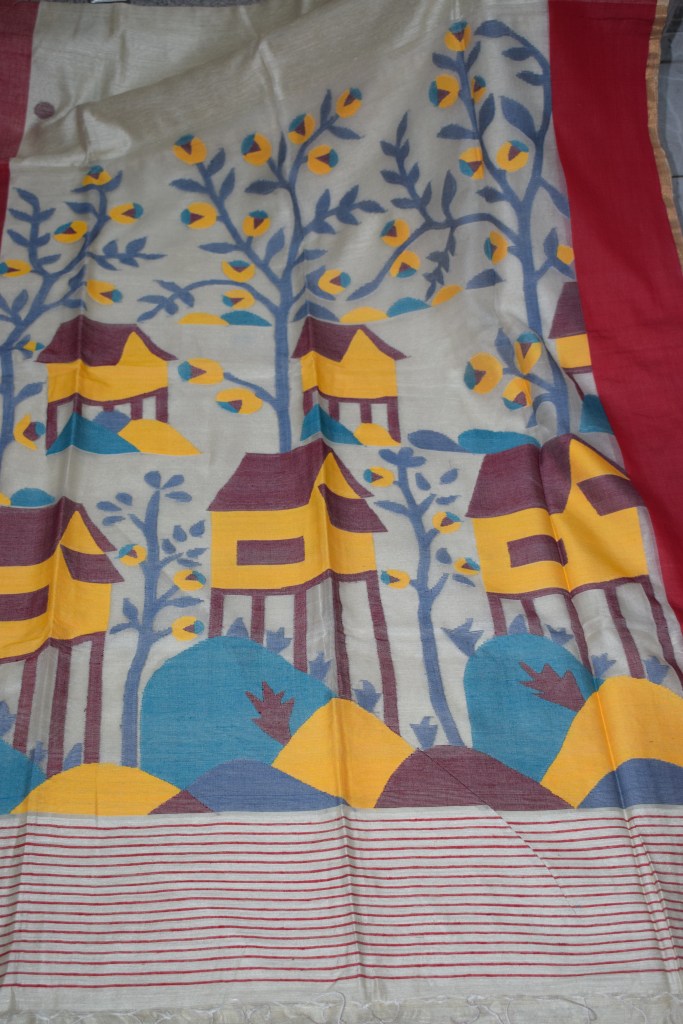
Kantha Stitch Hand Embroidery

Kantha Stitch by the word co-relates to the well known embroidery of West Bengal and Bangladesh. Kantha emboridery is predominantly done in the Birbhum district of West Bengal which is located 210 kms to north west of Kolkata. It is well connected by roadways and railways from the state capital.

Kantha traditionally was done using old soft dhotis and sarees by stacking them together and binding them by the running stitches along the edges. Done by the rural population it is also the major employment generating source for the less priviledged ones.

These days it is done as surface ornamenting on the sarees, stoles, dupattas, bedsheets, cushion cover as well.

A single saree takes anywhere from a month to 3 months depending upon the amount of work in it. Usually the work is distributed to the woman and man in the rural areas at their home. The women after doing their household chores take out the extra time to do the kantha embroidery work on the product. Once the embroidery work is completed, the finished work is collected from them and then it goes through the finishing process which involves washing, polishing, ironing and packing.

Since the amount of labour and time involved to do Kantha embroidery is much, thus was majorly done on pure silk base such as tussar silk, Ghachi tussar silk, mulberry silk (Bishnupuri silk). But to cut down on the cost and to penetrate the middle class section of the society now Kantha embroidery is as well done on Art (acronym for artificial) silk and cotton as well.

A pure silk Kantha saree can cost anywhere from 7k to 14k and above depending upon the work and time involved. Every piece made is unique in itself.
Indian Hand Embroideries

The craftmanship and beauty of Indian embroidery is breathtaking. India being a vast land not just have cultural and regional difference but same is also seen in the art and skills. Similar is the beauty of embroideries prevailing in each of these regions.

These embroideries are so intricate and mesmerizing that one gets soaked up in its charming beauty. No doubt such work takes lot of patience and perseverance to be made.

Each region of India nourishes various forms of these intricate embroideries. All have some history associated with it, be it Chikankari of Lucknow, or gotta patti work of Rajasthan. The list of these embroideries is unending and are known locally with different names. We have tried to list here the best known embroideries of India.

  1. Chikankari Hand Embroidery
  2. Gotta Patti Hand Embroidery
  3. Kantha Stitch Hand Embroidery
  4. Soof Hand Embroidery
  5. Aari/ Zalakdozi Hand Embroidery
  6. Needle Work – Hand Embroidery
  7. Paper Machie Hand Embroidery
  8. Tilla Work – Hand Embroidery
  9. Zardosi Hand Embroidery
  10. Kashmiri Kalamkari Hand Embroidery
  11. Phulkari Hand Embroidery
  12. Pakko Hand Embroidery
  13. Parsi Gara Hand Embroidery
  14. Mural Hand Embroidery
  15. Mirror work Hand Embroidery
  16. Lambani Hand Embroidery
  17. Sindhi Stitch/ Kutchi Bharat Hand Embroidery
  18. Kashmiri Kashidakari Hand Embroidery
  19. Kamdani Hand Embroidery
  20. Chamba Rumal Hand Embroidery
  21. Banni or Heer Bharat (Gujarat) Hand Embroidery
  22. Karchobi Hand Embroidery (Rajasthan)
  23. Kasuti or Kasuthi hand embroidery(Karnataka)
  24. Kathi (Gujarat) hand embroidery
  25. Kutch or Aribharat hand embroidery
  26. Mukesh Work hand embroidery
  27. Phool patti Ka Kaam (Uttar Pradesh)
  28. Pipli applique work embroidery(Odisha)
  29. Rabari hand embroidery(Rajasthan and Gujarat)
  30. Shamilami hand embroidery(Manipur)
  31. Toda or Pukhoor hand embroidery
  32. Salma Hand Embroidery

Indian Paintings

Going deep into Indian Art shows long history of Paintings but only few evidences survived due to climatic factors.

Vernacular art is an art alive (contemporary art), based on the past (the myths, the traditions and the religion) and made by defined groups. Vernacular art is based on the collective memory of this group. In other words we can say vernacular art to be a genre of art and outdoor constructions made by untrained artists who do not recognize themselves as artists. naive art, outsider art, primitive art, self-taught art. genre – a class of art (or artistic endeavor) having a characteristic form or technique.

Examples of some Vernacular Indian Paintings popularly made on textile / fabrics are:

Tribal Painting:

Rural Painting:

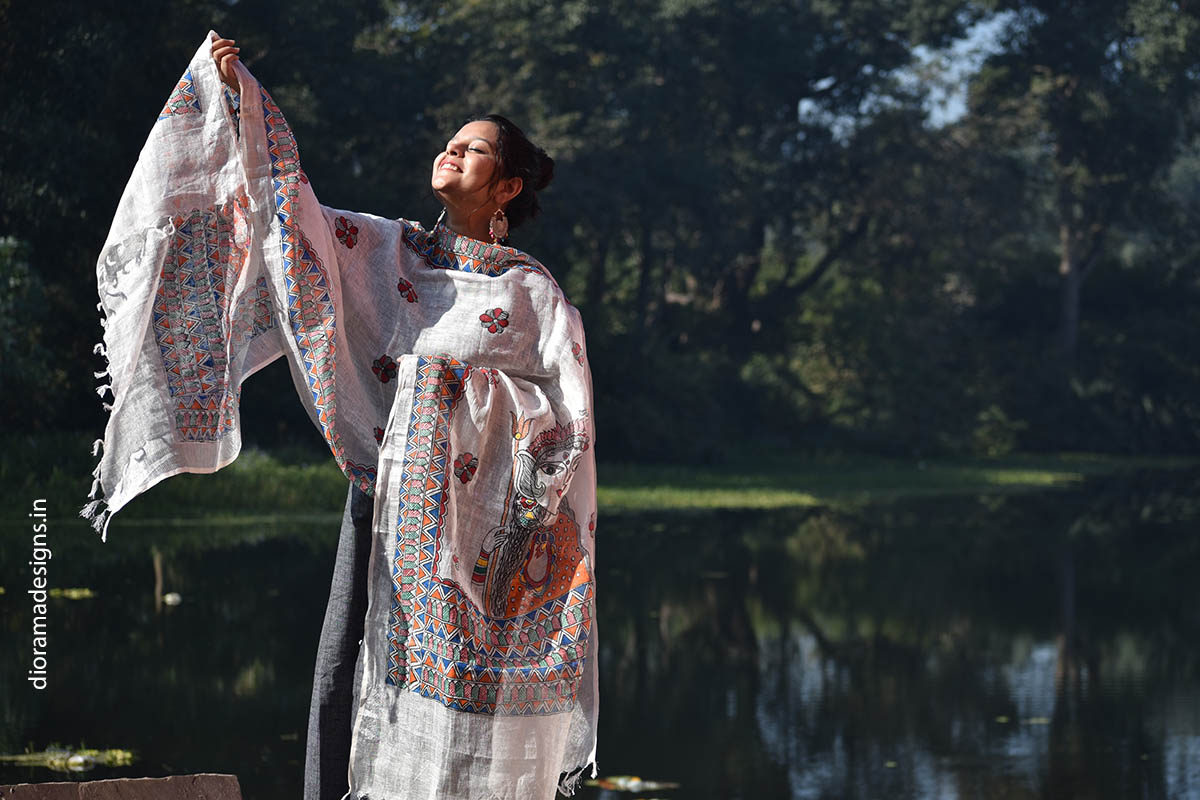
Hand Painted Art – Madhubani

Madhubani is the famous art which originated in the Mithila region of Bihar (India). This art is considered to be as old as the era in which Ramayana was set. It is said that the inhabitants of the Mithila region painted their home and streets with this Madhubani art to celebrate the wedding of Lord Ram and Sita.

This art form was majorly done and redone on walls (mural paintings) and floor to mark the special occassions and festivities using natural colors and twigs of the tree available. These days it is done using acrylic paints and brush. And also we can see new arts and artifacts being created like on canvas, fabric, wooden base etc which has a global appeal.

Madhubani painting has become one of the sources of income in the Mithila region. Madhubani painting has received Geographical Indication (GI)

https://www.facebook.com/madhubanihandpainted

https://www.facebook.com/exquisitehandlooms

Matka Silk Handlooms

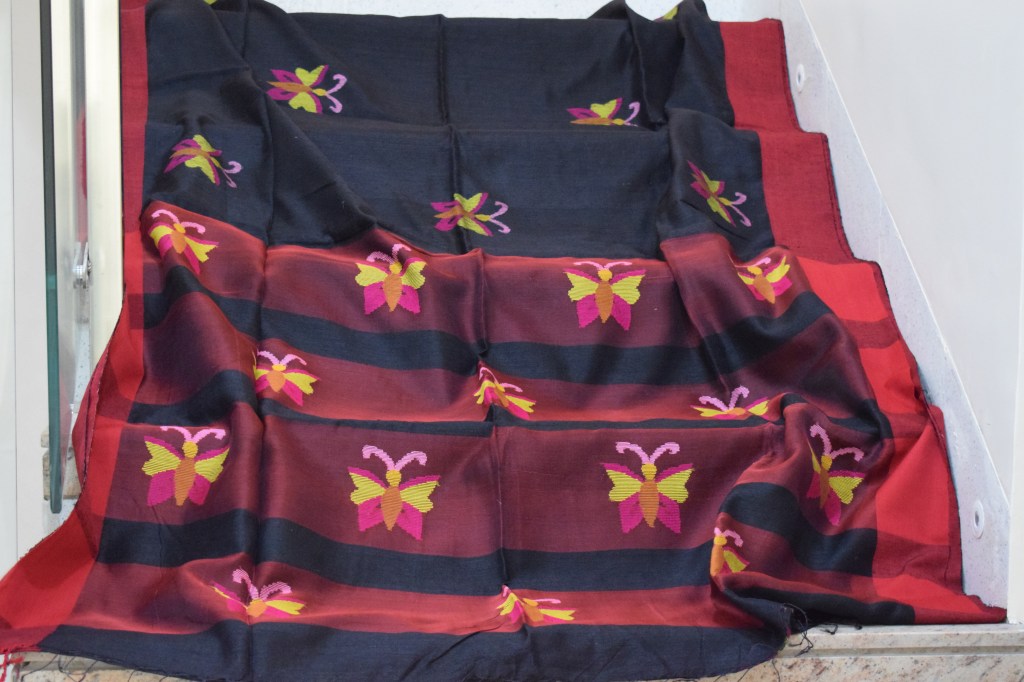
Matka Silk is characteristically referred to the silk, spun directly from the cocoon without removing the gum / sericin. It is the by product of Bombyx Mori silk worm popularly known as Mulberry Silk. In India, the major mulberry silk producing states are Karnataka, Andhra Pradesh, West Bengal, Tamil Nadu and Jammu & Kashmir which together accounts for 92 % of country’s total mulberry raw silk production. Remaining silk from the reeling process becomes the raw material for carded or combed, spun silk yarn. The short fibres left behind after the carding or combing process are used to make noil yarn, a richly textured nubbly silk commonly referred to as Matka Silk.

The spinning process of Matka silk majorly takes place in Murshidabad and Malda district of West Bengal. Thus we find Matka silk handlooms majorly being made in Bengal.

You can visit the following pages to see these more designs in these Matka handloom:

https://www.facebook.com/matkasilk

https://www.facebook.com/exquisitehandlooms

Design a site like this with WordPress.com
Get started